Simeon’s Story: An exegetical retelling of Luke 2:25-39.

Preachers often assume that an exegetical presentation of a text requires the typical sermon format. However, one can present the meaning of a text, along with its historical and literary context, in other formats. Below is an example of an one person exegetical drama from the perspective of Simeon. You will notice that a lot of historical context is woven into Simeon’s speech as well as references to the most likely Old Testament allusions. Care was also taken to emphasize Luke’s most likely purpose in including the Simeon pericope in his Gospel.

The hermeneutical task includes presenting a text in a way that hearers can understand and apply. Certain hearers are better able to hear and apply a first-person presentation of an exegeted text. When preachers vary their presentation, they are more likely to reach a broader spectrum of listeners. I hope you find the following presentation of Luke 2:25-39 helpful to your preaching.

Simeon’s story. A historically based, first-person retelling of Luke 2:25-39

 As I look back on my life, I see it has been a life of waiting. Even as a child, my father and I would scan the western horizon for clouds as we waited for the spring rains to refresh the land. He would say, “Simeon, don’t let the wait for rain dampen your spirits.” He told me that every new generation of Israelites must learn to wait on God. Our God announces something through his prophets, and it might take centuries for God’s promises to be fulfilled-but our God keeps His promises. Our ancestors waited in Egypt for 400 years before God raised up Moses to deliver them from slavery. My father assured me that one day God would send a savior whose kingdom will never end. He said, “The prophets have predicted it, so we can count on it. Until then we wait for God’s kingdom, and we don’t settle for a man-made substitute.”  

I later understood that my father was speaking about the Jewish Hasmonaeans who claimed to be God’s chosen rulers. When I was a boy, Israel was actually independent. After the Maccabean revolt threw off foreign rule, many thought that the prophecies of restoration were fulfilled and the wait for Israel’s golden age was over. But eventually the Jewish kings were not much better than foreign ones, and infighting caused them to invite the Romans to come help. The problem is when the Romans help, they help themselves to whatever is best for Rome. When I was a young man just starting on my own, the Romans marched into Jerusalem. We are still waiting for them to leave.

After years of Roman occupation my cousin got tired of waiting. He joined a group of zealots that planned to take Israel’s salvation into their own hands. The Romans heard about the group and crucified them all before they even had a chance to raise their swords in battle. No, only God can bring lasting deliverance. Decade after decade I prayed that God would send the promised Messiah to shine His glory throughout the world and to restore our land.  Of course, there were many pretenders who tempted us to think our wait was over – for instance the current king, Herod.  He convinced the Romans to install him as our local “Jewish” king (Herod is from Idumea not Israel). Herod craftily pitches himself as a new Solomon. He is re-building the Jerusalem temple so that it is even bigger than Solomon’s. Herod wants people to think he is some sort of savior, but he only uses our faith to get popular support. Herod is just another human pretender – a self-obsessed Roman puppet that will cling to power at all costs. Men like Herod made me long for God to fulfill His promises even more.

All my life I waited for God to send a savior as the prophets foretold. I was not just praying for an end to political pain, but personal pain. I have outlived so many of my family members, even some of my grandchildren. My family and I have suffered from drought, hunger, theft, violence, and death. Countless nights I have prayed Psalm 13, “How long, oh Lord will you forget us forever.” My lament was not because I didn’t believe, but because I knew God as gracious and merciful, slow to anger and abounding in steadfast love. I trusted in the promises He made, so I continually and fervently prayed. Decade after decade I waited faithfully, following what I knew God wanted in my life each day. Faith is not just knowing the prophecies but acting right every day. In my daily life I sought to love my neighbor, to give to those in need, and to point people to God. Every day I tried to live faithfully and expectantly in the waiting. 10 years turned to 20, 20 turned to 30, 30 turned to 40.

Finally, God spoke! The Lord revealed that I would not die until I saw the Lord’s anointed! How did he speak? I didn’t hear an audible voice, but as I read through Isaiah’s prophecies of redemption, the Spirit filled me with a conviction that I would see this Messiah with my own eyes! I had a renewed purpose. I was to be a watchman who waits for this King so that I can announce His arrival! I constantly told people that He was coming soon. I continued praying that I would remain watchful and in God’s will. The Spirit of the Lord was upon me. Yet many more months passed and the Lord’s anointed still didn’t arrive. I experienced more heartaches and more injustice from worldly rulers. I prayed as I had for many years, but with an increased urgency: “Lord, how long? I am getting so old; my body is wearing down. More loved ones have died. How much longer? Nevertheless, I trust you, Lord.”  More waiting.

Then last week, the Savior arrived! The Spirit impressed upon me to go to the temple immediately. I went as quickly as these old bones would take me, but I felt a renewed strength as if I was soaring on the wings of eagles (and I certainly was sore the next day). I waited at the gates of the temple, scanning the crowds of worshippers. I prayed that the same Spirit who directed me there would direct me to the right couple.

I noticed a rather plain looking couple carrying an infant. The father had 2 turtledoves- the offering for purification after childbirth that Moses directed in Leviticus. Leviticus actually called for an offering of a lamb and a turtledove. However, the poor could substitute another turtledove for the lamb. The woman looked so young, still in her teens. Just as my eyes were about to move on from this plain, poor couple, I was overwhelmed with the Spirit. This was the one I had been waiting for! I called to the couple, “Wait, let me see your child!” The couple was somewhat startled, but the young woman tilted the infant towards me and said, “This is Jesus. We have come to dedicate him to the Lord our God and give the purification offering.”  His name was Jesus, which means “Yahweh saves”! Here was the savior, and the salvation, we had waited for. The prophecy and my purpose were fulfilled. I said to the couple, “Let me bless this child!” I took this child in my arms and said: “Lord, now you are letting your servant depart in peace according to your word; for my eyes have seen your salvation that you have prepared in the presence of all peoples, a light for revelation to the Gentiles, and for glory to your people Israel.”

My mind was overflowing with Isaiah the prophet’s words, which were being fulfilled right in front of me! Almost any scripture from the last third of the scroll seemed relevant to the moment, but one that I have written to keep by my heart is this: “The voice of your watchmen—they lift up their voice; together they sing for joy; for eye to eye they see the return of the Lord to Zion. Break forth together into singing, you waste places of Jerusalem, for the Lord has comforted his people; he has redeemed Jerusalem. The Lord has bared his holy arm before the eyes of all the nations, and all the ends of the earth shall see the salvation of our God” (Isaiah 52:8-10). It was not just the prophetic words of Isaiah that were being fulfilled, but the Lord’s personal word to me that I would not die until I saw the Lord’s Christ.

One day this child will set the captives free, restore sight to the blind, and invite people to repent and enter God’s kingdom! This invitation will not just be to my people; the Messiah will be a light to all nations. Indeed, the Lord God promised our father Abraham that all the nations would be blessed through his descendants. We children of Abraham were not only meant to share in God’s glory ourselves but share it with the nations. Although we have failed at that task many times, the Lord himself is seeing His plan through. This child will bring the light of God to the world and restore the glory of God to Israel. Joy to the world, the Lord has come!

Mary and Joseph marveled, and I pronounced a blessing upon them as well. As I handed the child back to his mother I looked into her eyes (such strong eyes for such a young women) and even more prophetic scriptures flooded my mind. The Lord’s Messiah will bring salvation and restoration, but true restoration requires removing that which is against God. Isaiah spoke of the Messiah as a suffering servant who would take on sin. As this servant takes on that which is against God, he would suffer rejection and even death. This young woman would experience not just the joy of God working through her son, but the sorrow from those who will oppose Him. The prophetic words came out of my mouth before I even realized it: “Behold, this child is appointed for the fall and rising of many in Israel, and for a sign that is opposed (and a sword will pierce through your own soul also), so that thoughts from many hearts may be revealed.”

Just as salvation is centered on this child, this child himself would be the decision point that reveals people’s hearts towards God. God’s purposes will not be universally supported; they will also be opposed. Mary’s son will be the corner stone of God’s kingdom that some builders will reject. My people have a long history of rejecting God’s covenant gifts, and it will be no different in the messianic age. Conflict will arise that will not only expose the hearts of people, it will pierce the heart of this strong, but young mother.  

My somber realization was quickly overshadowed by the arrival of Anna, the daughter of Phanuel of the tribe of Asher-a prophetess. Since before Herod even started rebuilding the temple, Anna was a fixture in the temple courts, praying and fasting for the redemption of Jerusalem. When I first met Anna, I asked her about her frequent fasting. She said, “I am a weak widow with no worldly power. Fasting is a type of protest that something is not right. When I fast and pray, I am calling on the power of heaven to come and fix what is not right. I cannot save anyone from the injustice and pain of the world, but God can.” God heard Anna’s pleas, and He often spoke a prophetic word through Anna. Sometimes she would proclaim that God’s redemption was coming and call us to repentance. On that day, the Spirit spoke the same thing to Anna as He spoke to me – your wait is over. Anna joined me in giving thanks to God and witnessing “to all who were looking forward to the redemption of Jerusalem”. Anna and I were the 2 witnesses that God brought together that day to proclaim and celebrate that the wait for the Savior was over!

I don’t know exactly what will happen as this child grows. I do know he will expose the hearts of many. If Herod finds out, his jealous heart will seek this child’s life. Because of opposition, pain and conflict will continue for a time. While I won’t be around to see exactly what the next step will look like, this child is another reminder that God keeps His promises every step of the way. We can wait on him for the next step.  Even if the wait has been long and full of sadness, God does what He says. His plan and purposes are bigger than my short life, even though He called me to be a part of His plan. Now I can depart this world and its troubles in peace, knowing that God’s plan and promises have prevailed and will prevail. Until the day I depart this earth, I will tell this story and invite all to receive this Jesus and God’s salvation. Is your heart open to receive this child?  My heart and Anna’s heart are full of joy as we receive this savior, this king – our wait is finally over! With my last breath, this watchman can call out, “Joy to the world the Lord has come, let earth receive her king!”

Psalm 19, Encountering the Creator through A.W.E. of Creation

Since history began, creation has inspired a sense of AWE in people. The opportunities for awe are as varied as creation itself: a sunset, a mountain top vista, the birth of a baby, a honeybee in a colorful flower. As technology has developed, and we see to the microscopic level or deep into the universe, our awe has only increased! The Hubble and James Webb telescopes have brought us amazing images of far flung galaxies-each with billions of suns and planets.  Microscopes have unlocked microscopic processes that have a fine-tuned accuracy and intricacy.

With amazing technology, we see farther and describe natural processes more accurately, but creation still stirs the same ancient feeling in humanity. That sense of awe brings with it deep questions and yearnings for the “why” and “who” behind it all.  Awe of creation stirs in us a desire for the transcendent – the meaning and reason behind the universe. As Ecclesiastes 3:11 says, “God has made everything beautiful in its time. Also, he has put eternity into man’s heart.” Awe of creation is meant to stir our hearts to consider the awesome eternal creator of it all!

Many scriptures encourage us to consider various aspects of creation as a way to draw near to the Creator. Today we look at Psalm 19 not just as a beautiful song about creation and the creator, but as a guide on how to let the AWE of creation connect us to the awesome creator. 

In Psalm 19 The Psalmist begins (1-6) by turning his attention to the sky and being awestruck at how it declares God’s glory. In this section the writer focuses on how God even controls the mighty sun, which runs across the sky like a strong man. Verse 7 shifts from general to special revelation as the writer extols God for His word. The psalmist finishes by Encountering God personally in verses 12-14 expressing a personal confession of repentance and a plea for God to help him see and overcome his own sinful struggles. The AWE of creation set the Psalmist on the path to deeper connection to the awesome creator. This psalm can also guide us so that those stirrings of awe in our heart at nature’s glory can draw us into an encounter with the creator of it all. 

Psalm 19 and the acronym A.W.E. give us a simple method to connect with creation as a way of drawing close to the Creator.

Attention. Turn your attention to something in creation with an open heart toward the creator What feelings/thoughts does it stir up?  What does this part of creation reveal about the creator?

 Psalm 19: The heavens declare the glory of God, and the sky above proclaims his handiwork. 2 Day to day pours out speech, and night to night reveals knowledge. 3 There is no speech, nor are there words, whose voice is not heard. 4 Their voice goes out through all the earth, and their words to the end of the world. In them he has set a tent for the sun, 5 which comes out like a bridegroom leaving his chamber, and, like a strong man, runs its course with joy. 6 Its rising is from the end of the heavens, and its circuit to the end of them, and there is nothing hidden from its heat.

   The Psalmist turns his attention to the sky. In particular he focuses on the sun and how it charges across the sky. Nothing can escape the sun; “nothing is hidden from its heat.” If you have ever sat in the shade for a while, you know that what once was shady is sunny after a couple hours. How much more, therefore, can one not hide from the creator of that sun! The sky and sun proclaim God’s glory, it is His handiwork. Although it doesn’t proclaim it with words, the message of the creator of it all goes across the globe just like the sun. Verse 4: “Their voice goes out through all the earth, and their words to the end of the world.” This is “general revelation”.

Command to pay attention or consider creation as a way to connect with the creator is all over scripture. Psalm 8 calls us to consider the night sky (astronomy), Psalm 139 proclaims the wonders of the human body (biology), and Jesus himself taught important truths by pointing to examples from creation.

While it is easy to be “blown away” with awe at the Grand Canyon or Niagara Falls, even the little things of creation can stir us if we would just pay attention. The crystals on the window from a cold winter’s night have a geometric beauty that can stir the soul.

Scripture commands us to pay attention to how the created order points to the glory of the creator. So step 1 in following Psalm 19 is to turn our attention and consider some part of creation. We can do this every day.

 God’s word or message goes out in a general sense through creation (that is why creation is often referred to as “General Revelation”), but general revelation only reveals so much. For instance, if the sun is powerful and inescapable, how much more powerful is the creator! But many questions remain: Is that powerful God still active in the world? Does this God want to burn us? These questions require “special revelation” to answer. Special revelation is when God reveals his word or message in human language. Step 2 is considering God’s word, which the Psalmist turns to in 19:7-11.

7 The law of the LORD is perfect, reviving the soul; the testimony of the LORD is sure, making wise the simple; 8 the precepts of the LORD are right, rejoicing the heart; the commandment of the LORD is pure, enlightening the eyes; 9 the fear of the LORD is clean, enduring forever; the rules of the LORD are true, and righteous altogether. 10 More to be desired are they than gold, even much fine gold; sweeter also than honey and drippings of the honeycomb. 11 Moreover, by them is your servant warned; in keeping them there is great reward.

  Word. Following Psalm 19’s pattern, the message of God’s creation pushes us to His revealed word. The Psalmist first considered creation, but then in 19:7 turned to how the word of God is also beautiful and so valuable in guiding a person into God’s will and blessings. God’s word gives us answers to those stirrings from creation: “This creator is more powerful than all these things beyond me, but is he knowable, is he loving? Why did he make it all?” God’s word, or special revelation, is where God reveals himself in human language so that He can be known.

Once we pay attention, how does God’s word (scripture) inform what you noticed in creation? It can be something concrete and direct, like noticing an eagle and that reminds you of Isaiah 40:31, “they who wait for the LORD shall mount up with wings like eagles . . .” Or noticing something that reminds you of a general biblical concept-like a fallen tree reminds you of mortality and that we will stand before God. Look at the created thing through the lens of God’s word.  

The need for God’s word is crucial to both Jewish and Christian understanding. God has revealed himself, he has spoken to and through people. Just like God has put laws into nature, like gravity, like the speed of light, he has a moral law to guide and form us. As God’s image bearers, and moral agents, God reveals His will and ways to us.

When we think of “law” we think of constraints and reluctant obedience, but the Psalmist sees the law as beautiful, sweat as honey, and valuable like gold. Because the law (which is the Hebrew word Torah, which refers to all of God’s revelation) reveals who God is in an even more particular way, it is particularly valuable and beautiful. The bright morning sun speaks to the radiance of the God who made it, but God’s word reveals that this God is also abounding in love and wants to share his radiance with creation. So we interpret what we see through the lens of Word.

 A side note on the term “God’s word” – Jesus is also referred to as the Word (John 1:1-4). Jesus is God’s ultimate self-revelation! Through Jesus God has not only communicated in human language, but human flesh. While we can know someone through their writings, we can now them even better through a personal relationship! That relationship is possible because God made himself known through Jesus. In Jesus Christ we have the perfect intermediary between our Creator God and created humanity.

Because God has revealed himself in his word to be a personal God, that awe can bring us to an Encounter. Psalm 19:12-14 concludes on this note of encounter:  12 Who can discern his errors? Declare me innocent from hidden faults. 13 Keep back your servant also from presumptuous sins; let them not have dominion over me! Then I shall be blameless, and innocent of great transgression. 14 Let the words of my mouth and the meditation of my heart be acceptable in your sight, O LORD, my rock and my redeemer.

  Encounter God. The psalmist finishes by encountering God personally, entering into a conversation with God in verse 13. The writer expresses a personal confession of repentance and a plea for God to help him see and overcome his own sinful struggles. This encounter should be a two-way conversation when you talk TO God and then listen for anything FROM God.

To God: Lift up thanks or praise to God for the things He has created and that you are able to enjoy them. The scriptures are full of calls to praise God for His wonderful work. Psalm 148 calls on all of creation: sun, moon, the seas, animals, everything to praise their creator. 

From God: What do you feel God is telling you today?  Whatever you noticed, especially when it has prompted you to seek and exalt God, has become an opportunity for you TODAY. Remember considering the word is so important to discerning what God is saying. People often hear what they want to hear, so God’s written word is the standard by which we measure whatever we think God is saying today. Go from the transcendence of the creator to the intimacy of a personal God who speaks to His people. The psalmist, perhaps from contemplating the inescapability from the sun’s rays, knows that the creator’s light will expose sin in his life, even hidden sin that he can’t see on his own. So he humbly calls on God for help. He wants to be transformed so that his words and deeds are pleasing to the creator. The Psalmist has had a personal encounter with the creator, but he began his journey with turning his attention to consider creation’s testimony about the creator, then the testimony of the word, until the inner testimony of the Spirit applied these things to him personally.

Discussion questions:

Describe the last time you were filled with awe over creation?

What occupies your attention most of the day? When could you set aside time to pay attention to creation with a heart open to the creator?

How might incorporating the AWE method improve your prayer time? How might it create difficulties?

Do you see the importance of looking at creation through the lens of God’s word? What are potential dangers of neglecting the word in this process?

Practice it! Go and try the AWE method above. What do you feel God is telling you today

The Book of Revelation’s Structure

In the midst of an earthquake and eclipse in the Northeast United States, I was preparing to teach the book of Revelation for a New Testament Survey course. My preparations put these unusual phenomenon in their proper perspective. For one, John’s Apocalypse describes world-wide, end of time, events. Despite what residents of the Northeast U.S. might think, we are not the center of the world or history – especially salvation history. Most Christians today live in the global South and Revelation doesn’t even mention the United States. Second, the book of Revelation is cyclical, so the signs of the end-times will be things that have happened before and will follow patterns of intensification. The tribulations, disasters, and signs that it describes are drawn from Old Testament imagery. Revelation looks forward AND backwards to encourage people in the present to persevere in their faith. We often get lost in the strange details of Revelation and miss out on the stabilizing sovereignty of God featured in the book’s storyline. For this reason, an overall structural outline of Revelation is both needed and helpful.

In my opinion, Craig Koester has developed one of the best graphic outlines of Revelation’s cyclical structure (Revelation and the End of All Things, Eerdmans, 2018, pg 42–43). Scholars can’t seem to agree on an outline that accounts for all of Revelation’s quirks, twists, and turns, but Koester’s graphic accounts for several features of Revelation. Koester explains, “An outline of the book looks like a spiral, with each loop consisting of a series of visions: seven messages to the churches (Rev. 1–3), seven seals (Rev. 4–7), seven trumpets (Rev. 8–11), unnumbered visions (Rev. 12–15), seven plagues (Rev. 15–19), and more unnumbered visions (Rev. 19–22). Visions celebrating the triumph of God occur at the end of each cycle (4:1–11; 7:1–17; 11:15–19; 15:1–4; 19:1–10; 21:1–22:5). Those who read Revelation as a whole encounter visions that alternately threaten and assure them. With increasing intensity the visions at the bottom of the spiral threaten the readers’ sense of security by confronting them with horsemen that represent conquest, violence, hardship, and death; by portents in heaven, earth, and sea; and by seemingly insuperable adversaries who oppose those who worship God and Christ. Nevertheless, each time the clamor of conflict becomes unbearable, readers are transported into the presence of God, the Lamb, and the heavenly chorus. These visions appear at the top of the spiral. Threatening visions and assuring visions function differently, but they serve the same end, which is that readers might continue to trust in God and remain faithful to God.”

I have interwoven Koester’s explanation onto his spiral graphic to show how it works as a general outline. Too often in Revelation, we “can’t see the forest for the trees.” All of the strange details and symbols draw our focus away from the big picture. Therefore, keeping a big picture (or graph in this case) in view can help us follow the main themes and story line. Most of Revelation’s content, themes, and literary structure fit into this outline (although no outline is perfect). Many scholars note Revelation’s visions have patterns of sevens (a number that symbolizes universality or completion) that overlap and repeat earlier material while still advancing towards a finale. Each cycle spirals down into tribulation on the earth followed by a glimpse into heaven to show the sovereign God/Christ moving events towards victory. This patterned presentation, when coupled with frequent Old Testament allusions and symbols, doesn’t just look forward; it looks back to the history of God’s people oppressed and tempted by evil powers. Babylon pursued and persecuted the Israelites of old, and a new Babylon (Rome in John’s day) seeks to destroy and tempt God’s people. The sovereign Lord reigns over all of history; this includes the history of the suffering saints addressed in Revelation’s first three chapters. Yes, there will be eclipses, earthquakes, diseases, and war. God’s people will be persecuted. These patterns were present in Israel’s day, in John’s day, and in our day. However, all these patterns will one day culminate in the final judgment and redemption when Christ returns. Believers don’t know when that day will be; but it is sooner than it was when Revelation was written. The sovereign God of the universe, and the Lamb who was slain for our redemption, directs history. Even when the world is in great upheaval, God’s people have a secure place in Christ. For this reason, Revelation’s call to persevere in the faith is timeless and bigger than the events of our day. At the end of Revelation, Jesus reminds us: “Behold, I am coming soon. Blessed is the one who keeps the words of the prophecy of this book.” (Rev 22:7).  

An updated table arranging the New Testament books according to the date of composition.

This blog’s all-time most read post (found here ) contains a table arranging the New Testament (NT) books according to the date they were written. As I have been preparing a NT survey course, I felt the need to slightly update the chart. One such update concerns the Epistle of James. In my first chart, I underestimated the number of conservative scholars who consider James to be the first NT book written. For instance, Carson & Moo’s Introduction to the NT, Dan McCartney’s BECNT commentary, as well as Blomberg & Kamell’s ZECNT commentary suggest that James was written in the mid to late 40s.

The other changes are adjustments to the dates (and therefore their order in the table) that reflect a broader survey in my own reading. Below, I also reproduce the introduction to my original 2018 post.

_______________________________________________________________

Our modern New Testaments are not arranged chronologically, which sometimes causes misunderstandings. While the Gospels discuss the events of Jesus’ life (the crucifixion took place in 30 or 33 A.D.), the earliest Gospel probably was written down about 60. The Apostle Paul wrote many of his letters before the Gospels. This historical perspective is helpful when assessing arguments over material that some scholars may deem a “later theological development” in the early church. For example the “kenotic hymn” of Philippians 2 exhibits a very high view of Christ, despite Paul most likely writing Philippians before the Gospel writers completed their writings.  Note the exalted status afforded to Christ:

Have this attitude in yourselves which was also in Christ Jesus, who, although He existed in the form of God, did not regard equality with God a thing to be grasped, but emptied Himself, taking the form of a bond-servant, and being made in the likeness of men. Being found in appearance as a man, He humbled Himself by becoming obedient to the point of death, even death on a cross. 

Philippians 2:5-8 (NAU)

Some scholars believe these verses were a pre-existing hymn that Paul incorporated into his letter. If this theory is correct, then the high view of Christ can be traced to an even earlier time. Arguments, therefore, that assume a high view of Christ (i.e. his divinity) always reflects a later church development contain an invalid presupposition.

The table below arranges the NT books by their likely date of composition. Most NT books are difficult to date with precision, which is why discussions about dating can often be lengthy and still not definitive. The dating of the various writings depends on views of authorship, so I have included two columns of dates. The books are listed chronologically, according to their more conservative dating, but the right hand column provides dates from a more skeptical view. Of course, these dates are further debated within their respective “conservative” and “skeptical” camps, but I have tried to give the most common views from my own subjective survey of the data. For the most part, I have disregarded the “outliers” of either camp. I hope readers find the following table helpful.

Earlier, more
conservative dating 
NT Book
(Listed by date of Composition)
Later, more
skeptical dating 
45-60James70-100
48-Late 50sGalatians50s
Early 50s1 ThessaloniansEarly 50s
Early 50s2 ThessaloniansEarly 50s (later if forged)
Mid 50s1 CorinthiansMid 50s
Mid 50s2 CorinthiansMid 50s
Approximately 57RomansApproximately 57
Early 60sPhilemon60s
Early 60sPhilippians60s
Early 60sColossiansEarly 60s (70-90 if forged)
Early 60sEphesians70-90
Early 60s1 Timothy90-110
Early 60s1 Peter70-100
60sGospel of MarkLate 60s-70s
Mid 60sTitus90-110
Mid 60s2 Timothy90-110
Mid 60s2 Peter90-110
Late 60sHebrews60-95
Late 60sGospel of Matthew80-100
Late 60s-80Gospel of Luke80-100
Late 60s-80sActs85-130
60-80Jude80-110
80-90Gospel of JohnApproximately 100
Early 90s1 John 100-125
Early 90s2 John100-125
Early 90s3 John100-125
Late 60s or mid 90sRevelation100-125

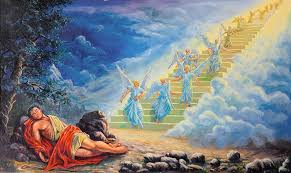
Jesus as the new Bethel. Study 5, part 2 in the “Where Heaven and Earth Meet” series.

This study looks at how the Gospel of John appropriated Jacob’s encounter at Bethel to show Jesus as the typological fulfillment of that event. If you have not read it already, I suggest reading the first part of Study 5’s post from December 27, 2016. That post examines Jacob’s vision as it appears in the book of Genesis. jacob

Bethel was a place where heaven and earth met. This connection was vividly portrayed in Jacob’s dream with angels going up and down a ladder that stretched to the Lord in heaven. In the Gospel of John, Jacob’s ladder finds fulfillment in Jesus Christ. Jesus himself makes this claim to Nathanael, one of the several men who are deciding to become Jesus’ disciples. We read about this encounter in John 1:43-51. Continue reading